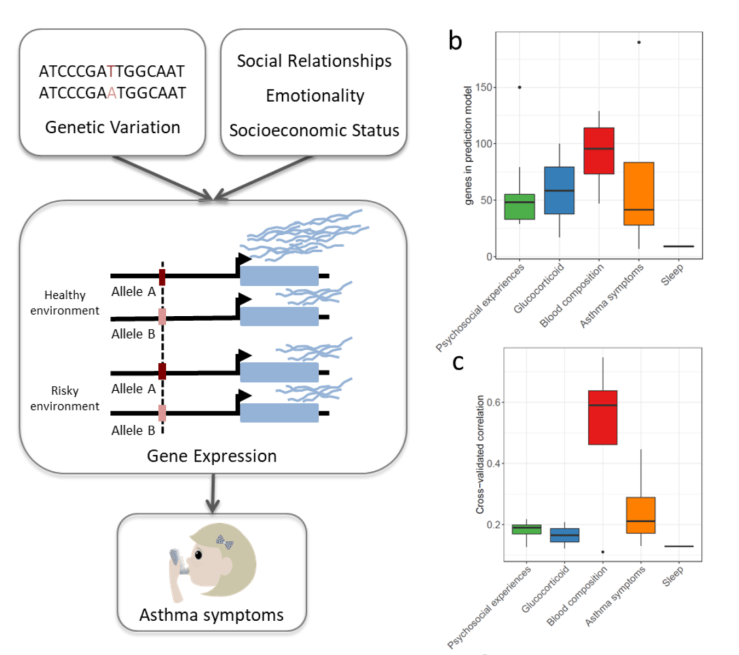
We have established a long-standing collaboration with colleagues in the department of Psychology at Wayne State University (Dr. Zilioli, Associate Professor) to study the interaction between genotypes and psychosocial experiences in children with asthma. Our working hypothesis is that negative psychosocial experiences alter gene regulation in immune cells with consequences for an individual’s health. We recruited 250 children with asthma living in metropolitan Detroit. For each of them we collected biological samples (peripheral blood mononuclear cells, DNA, RNA, plasma, serum), detailed psychosocial variables (family relationships, socioeconomic status, neighbourhood quality), health and developmental phenotypes (pulmonary function, sleep quality, asthma symptoms, pubertal stage). We identified transcriptional signatures of psychosocial experiences, genetic variants that regulate the transcriptional response to such experiences and finally causal connections between psychosocial experiences and asthma symptoms, that are mediated by gene expression changes in immune cells. Our results highlight the importance of considering the interaction between an individual’s complex environment and their genetic risk when designing personalized therapies in medicine and psychosocial interventions, with a special focus on disadvantaged communities (Resztak et al, eLife, 2021; Resztak et al, Nature Communications, 2023). We are now collecting single cell RNA-seq and ATAC-seq data in this cohort to identify GxE in immune cells in response to stimulation and suppression of the immune system, and the underlying regulatory factors (Resztak et al, Genome Research, 2023), to dissect interactions between psychosocial experiences, gene expression and immunological diseases in the different immune cell types.
 Luca Lab